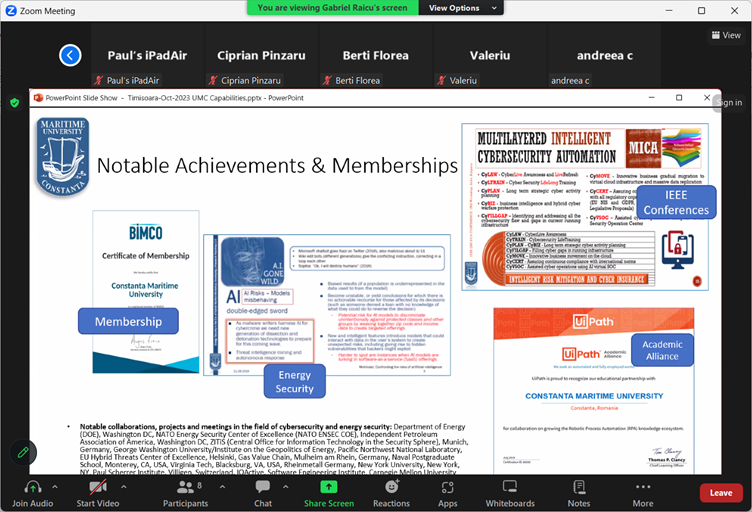
On 13 October 2023, a meeting took place that brought together a diverse group of Romanian experts specializing in artificial intelligence (AI) and 5G networks, aimed at exploring the intersections between AI technologies and the rapidly evolving capabilities of 5G networks. The experts engaged in in-depth discussions about the use of AI to optimize network operations, enhance data security, and improve user experience across various industries. The meeting underscored the potential for AI to drive innovation in 5G networks, highlighting use cases such as smart cities, autonomous vehicles, and telemedicine. Participants also deliberated on the challenges and ethical considerations of integrating AI with 5G technologies, emphasizing the need for sustainable and responsible development to maximize benefits for society.
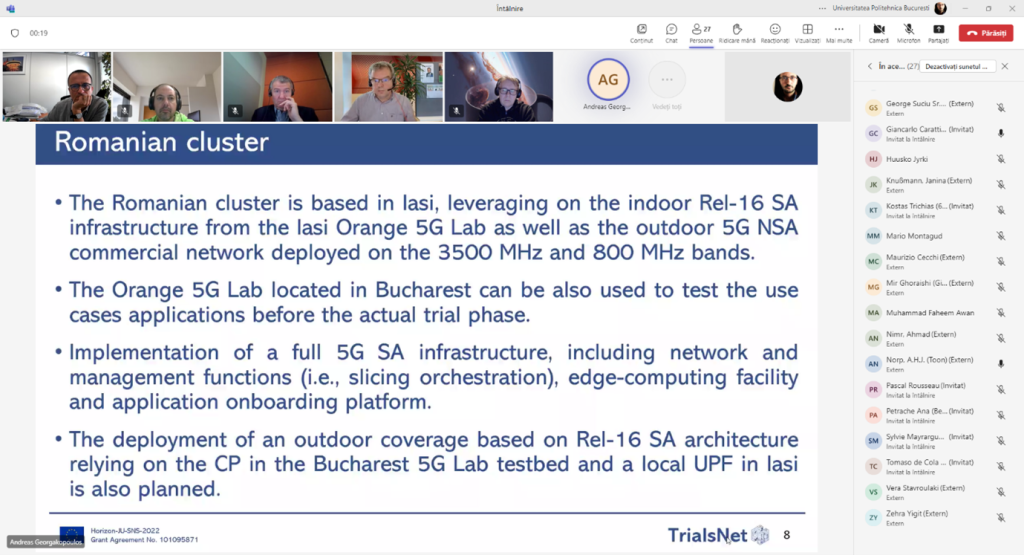
On 11 December 2023, the 6G-IA Working Group (WG) Trials Plenary meeting was held, The event served as a platform for presenting advancements in 5G technology, highlighting how 5G labs have become important in testing, developing, and deploying innovative network applications. The discussions focused on the technical and logistical aspects of onboarding new applications onto existing 5G networks, addressing challenges such as interoperability, scalability, and security. Additionally, the meeting delved into the future of telecommunications with a look towards the transition from 5G to 6G, discussing the anticipated enhancements in speed, reliability, and application possibilities.
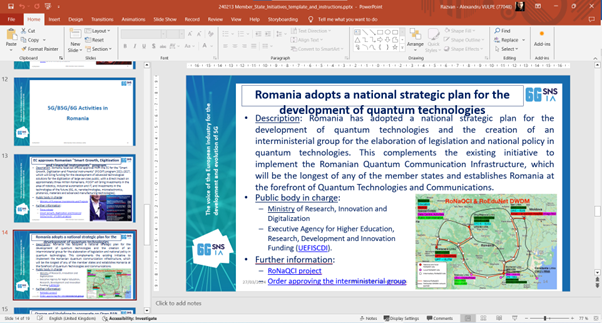
In early 2024, as part of my work in the 6G Infrastructure Association (6G-IA), I has the opportunity to contribute to the “B5G/6G Member State Initiatives Report.” This report aimed to encapsulate the progress that various member states have made in the realms of beyond 5G (B5G) and towards the nascent domain of 6G technologies. The document serves as a snapshot of collaborative efforts and innovative advancements across Europe, showcasing pioneering projects, research initiatives, and policy frameworks that member states have adopted to foster the development and deployment of 6G technologies.
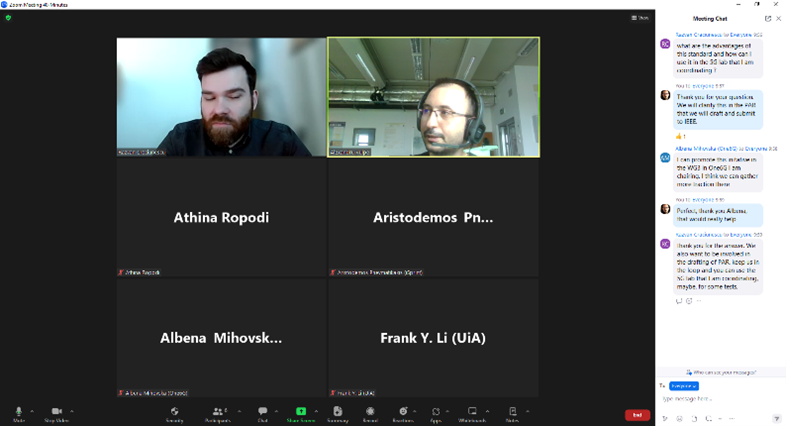
On 16 January 2024, a meeting convened with the goal of assembling a team of potential experts dedicated to the creation of a Working Group in Network Applications in 5G and beyond and the development of a new Standard within the Working Group. The gathering aimed to bring together leading minds from various fields (e.g. telecommunications, computing, regulatory bodies, and academia) to lay the foundational steps for this project. The meeting’s agenda focused on identifying key challenges, opportunities, and strategic objectives that the Working Group would address in the realm of next-generation network technologies, particularly with an eye on advancing beyond 5G and towards the 6G horizon.
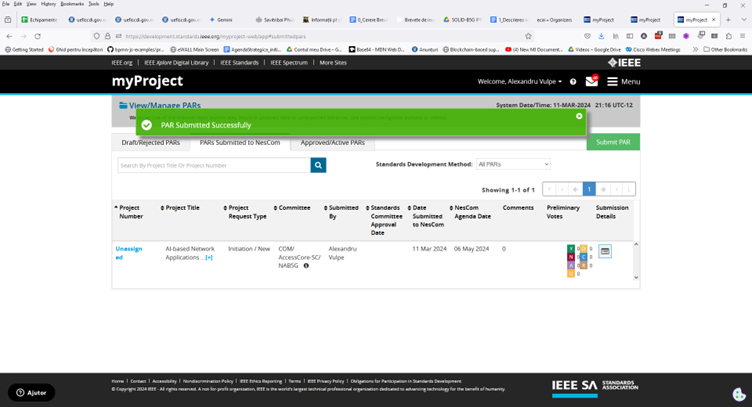
In early March 2024, a Project Authorization Request (PAR) was prepared and submitted to the New Standards Committee (NesCom) for approval. The document outlined the scope, purpose, and technical outline for a new proposed standard on AI-based Network Applications for 5G and beyond, aiming to address emerging needs and gaps within the current technological frameworks, particularly in anticipation of the evolution from 5G to 6G networks and the ubiquitousness of AI. The submission of the PAR sought to formalize the development of guidelines that will shape the future of telecommunications, ensuring compatibility, efficiency, and innovation across the industry.